Google It, Chat About It
During my reading this morning, the title of one of my devotions was God and
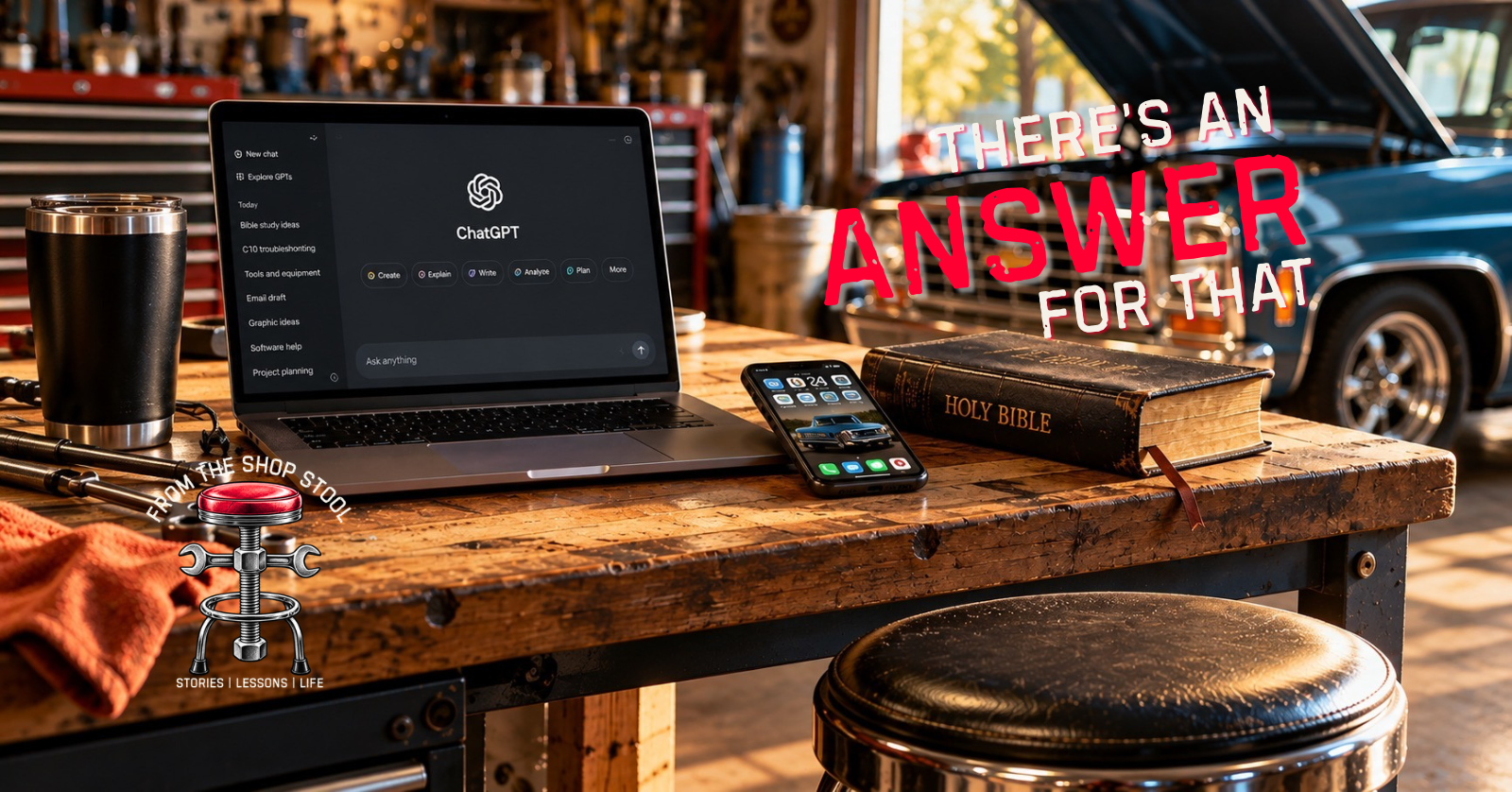
During my reading this morning, the title of one of my devotions was God and Google. I found this one pretty interesting, especially considering where we are with technology these days.
The devotion took a little different approach than where my thoughts went. It got me thinking about how we're using Google and even AI tools like ChatGPT, Grok, Claude, and Muse.
I use these tools just about every day, and I use them in different ways.
For example, I'll use Google to research something I'm thinking about purchasing or to find information about something I'm working on.
I use ChatGPT to help me work through ideas that are bouncing around in my head, proofread articles I've written (like this one), and help me learn new software applications.
One thing I like about ChatGPT is that I can ask it to walk me through something step by step. And sometimes, it's pretty good at it. Other times? Well, let's just say it doesn't always get things right!
I've also started using Muse a little more because it can actually perform tasks in the background. I use it kind of like a quality assurance person — a second set of eyes. For example, I've set up a task to check that an email was sent at a specific time.
I don't have as much experience with Grok or Claude, but I've used both of them occasionally.
With the new role I'm in at my day job, there's been a bit of a learning curve with some of the software I've been using. This is where ChatGPT has really come in handy for me.
When I'm creating a graphic or document that's going to be used on a website or in an email, I can ask ChatGPT to give me step-by-step instructions on how to create it from scratch. Sometimes you don't have a previous version to work from, and all you have are a few notes from someone explaining how they want it to look.
I've tried doing the same thing with Google, but it hasn't worked nearly as well for me.
With ChatGPT, I can ask it to be more specific, and it can get right down to telling me where to click, what dimensions to enter, which fonts to use, and just about everything else I need to know.
With Google, you might find instructions for what you're trying to accomplish, but they aren't always for the version of the software you're using. At least, that's been my experience.
You're probably wondering where I'm headed with all of this.
Well, it got me thinking about how we could use these tools to help us better understand and study the Bible, or even grow in our relationship with God.
Like I mentioned earlier, my preferred AI assistant is ChatGPT. And by the way, I usually just call him Chat. It's easier!
So I asked Chat what the five most commonly asked questions about God on Google were. Here's what he came back with:
Now, do I trust that answer? Well, somewhat. But I decided to do a little checking for myself.
So I went to Google and searched for the same information. Here's the list I found:
Looking at those two lists, Chat came pretty close! The first four questions were essentially the same, with only a slight difference in wording on the second one.
Not too bad, Chat!
So, how can we use these tools in our Bible studies?
As you probably know, sometimes it can be difficult to understand what the Bible is telling us. At least, that's been my experience.
And personally, I don't see anything wrong with using Google, ChatGPT, or other tools to help us better understand what we're reading.
But I'm not saying we should take what Chat, Google, or any other tool tells us about the Bible as the final word on what it means.
That's something we need to spend time talking with God about through prayer and studying His Word. And sometimes, that might mean sitting down with your pastor or another trusted Christian mentor to help you better understand what you're reading.
I look at it this way...
When I'm out in the shop troubleshooting something on the C10, I usually have my phone or computer pretty close by. I can ask Chat or Google what might be wrong by describing the symptoms and what's happening.
Both will give me a list of things to check. But neither one of them is standing there next to me, looking things over, getting their hands dirty, or turning a wrench.
At some point, I have to put down the phone, pick up a wrench, and do the work myself.
And I think the same thing applies to studying the Bible. These tools can help point us in the right direction, but at some point, we have to open God's Word, spend time with Him, and do some studying ourselves.
Because at some point, you and I have to do the work ourselves!
— From the Shop Stool