Cars, Friends, and CabotFest
Started out this morning meeting up with some friends just a few minutes from the
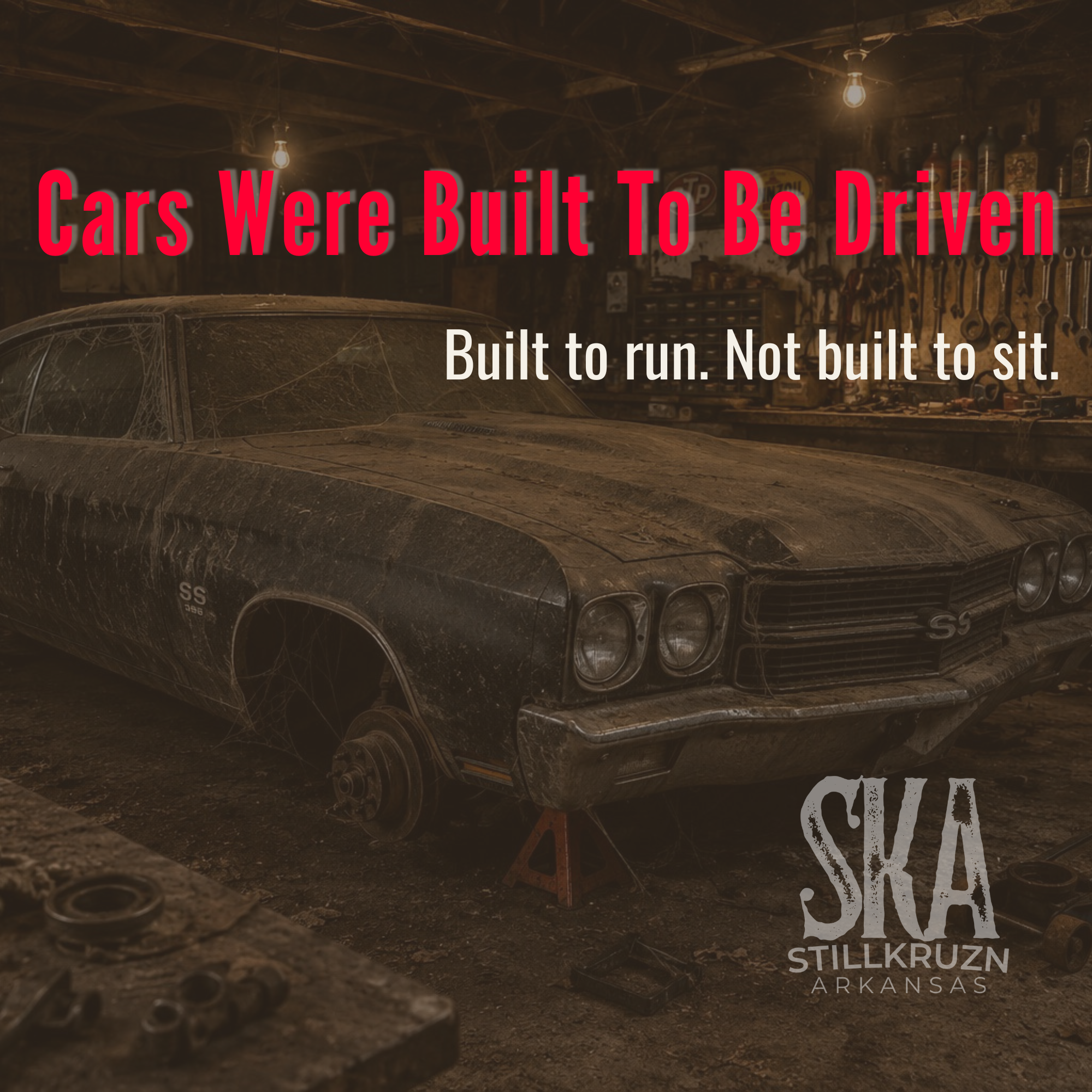
You might think that storing a car away in the garage is the best way to preserve it for future generations to enjoy. While that sounds like solid logic, there are a few flaws in that line of thinking.
When a car sits for long periods of time, things begin to deteriorate. In many cases, it actually creates more maintenance and bigger problems than regularly driving it.
When a vehicle sits too long, seals begin to dry out and crack. Tires develop flat spots and dry rot. Fuel left in the tank starts to break down. Batteries go dead and sulfate. Brake rotors and drums begin to rust. Moisture builds up in the exhaust system. And probably one of the worst problems of all — rodents move in like they just signed a long-term lease agreement.
Cars were built to move, run, and reach operating temperature on a regular basis. Letting one sit untouched for months — or even years — might protect the paint, but it can quietly destroy a lot of other things.
I try not to let my cars and trucks sit very long without at least starting them every couple of weeks. If I can’t take one out for a drive long enough to fully bring everything up to operating temperature, I’ll at least roll up the shop door, fire it up, and let it run until it gets warm.
That allows the oil to heat up and circulate throughout the engine, while also letting the coolant move through the entire cooling system like it’s supposed to.
Once the engine is up to temperature, I’ll hold the brake and slowly shift the transmission through each gear. I usually start in neutral, drop it down into the lowest gear, and then work my way back up to park, letting it sit in each gear for 20–30 seconds or so.
Doing both of those things helps get the fluids where they need to be and helps keep seals and gaskets doing what seals and gaskets are supposed to do — seal gaskets and keep fluids where they belong.
No, it’s not the same as taking the vehicle out on the highway for a good drive, but it’s still a whole lot better than letting it sit untouched for months at a time.
Fortunately, I live in an area of the country where I’m able to drive my cars and trucks almost year-round. There may be a few weeks here and there when the weather keeps them parked in the shop, but for the most part, they get driven regularly.
And honestly, driving them is the best medicine and probably what your mechanic would recommend.
But there is something else people often don’t realize — short trips can actually be hard on a vehicle too.
That quick 3-mile drive across town usually isn’t enough to fully recharge the battery. The engine oil may never fully reach operating temperature. Condensation inside the engine and exhaust system doesn’t get burned off properly. Over time, moisture and contaminants begin building up, which can eventually lead to sludge, corrosion, and premature wear.
In other words, constantly taking short trips without ever fully warming the vehicle up can slowly create problems of its own.
So what’s the best thing you can do?
Take it out for a good drive.
A nice 30-mile cruise on the highway does more good for a vehicle than people realize. It allows the battery to charge properly, gets fluids fully warmed up and circulating, helps remove moisture from the engine and exhaust system, and simply keeps things exercised the way they were designed to be.
Now, I also understand that isn’t possible for everyone. Depending on where you live, winter roads, salt, snow, and harsh weather can create a whole different set of problems too. Sometimes keeping it parked really is the better option for a season.
And this isn’t just an old car problem — it applies to newer vehicles too.
With older vehicles, carburetors can gum up, vacuum lines crack, and seals begin to shrink and dry out. But newer vehicles have their own issues when they sit too long.
Modern cars constantly draw power from the battery because of electronics, computers, and modules running in the background. Fuel systems don’t handle stale fuel very well, and today’s sensors and control modules absolutely hate low voltage conditions.
In other words, even modern vehicles get a little grumpy when they’re neglected for long periods of time.
No matter if it’s a carbureted Chevelle, an LS-swapped squarebody, or a brand-new daily driver, vehicles were built to be driven, not parked indefinitely.
That old — or new — car really doesn’t ask for much. But you do have to start it, drive it, maintain it, and pay attention to it once in a while.
Vehicles are a lot like people in some ways — they tend to respond better when they get a little regular attention instead of being forgotten in the corner of the garage.
Most vehicles will take care of you for a long time if you simply use them the way they were built to be used.
So every now and then, open the garage door, turn the key, and go enjoy the drive. Your car will probably thank you for it.
Stay Safe | Have Fun | Stay Kruzn