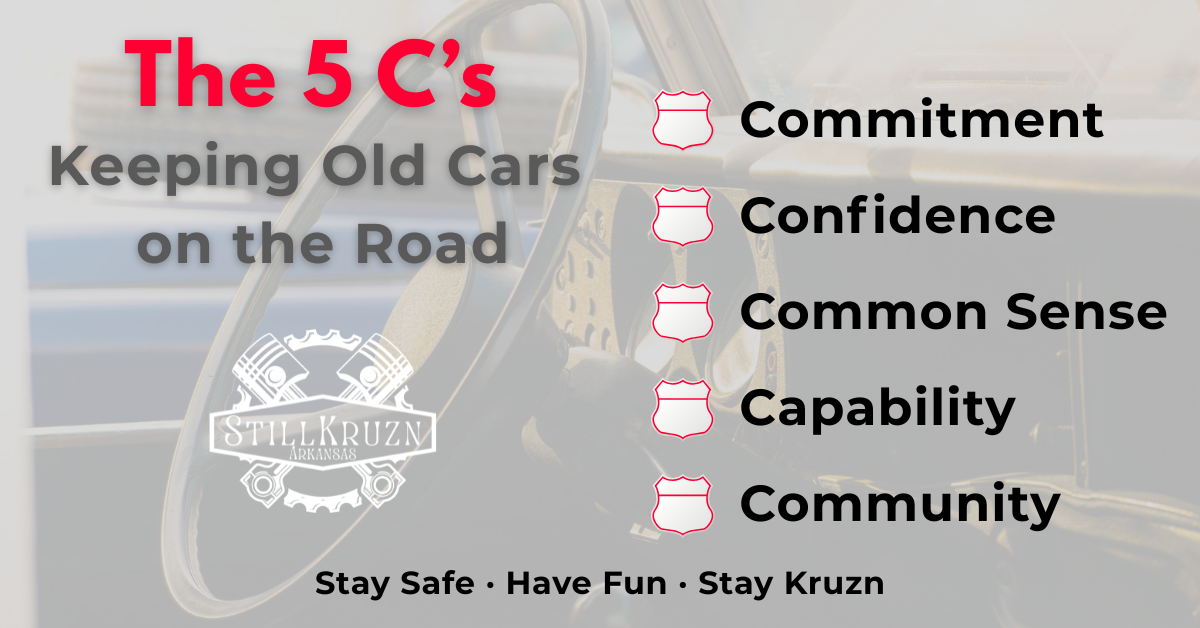
As most car guys (and gals) do, I spend a fair amount of time watching YouTube. I recently came across a video that laid out four “C’s” of daily driving an old vehicle. It stuck with me and got me thinking about how that idea applies to how we actually use our old cars—whether that’s daily driving, weekend cruising, or long road trips. So here’s my take.
Commitment
If you own an old vehicle and actually drive it, you already understand the level of commitment it takes to keep it in shape. It’s more than giving it a quick bath on Friday night because there’s a car show Saturday morning.
Commitment is checking fluids, setting tire pressure, and paying attention to all the little things that keep it safe and reliable. It’s the stuff most people never see, but you notice every time you turn the key.
Then there are the bigger projects—usually tackled in the winter—like a new wiring harness, an engine rebuild, or chasing down issues that have been waiting their turn. Keeping old cars on the road takes time, effort, and patience, and when you drive them, you accept that they’re going to need attention from time to time.
Old cars are never “done.” Anyone who says otherwise is selling something.
It doesn’t have to be perfect—just cared for.
Confidence
When we talk about confidence, we mean knowing your vehicle—trusting what you’ve checked and staying calm when something feels off.
Confidence also means trusting yourself to make sound judgments when something isn’t right. Is this something I can handle myself, or is it time to ask for help? Knowing the difference matters.
That kind of confidence makes you more comfortable behind the wheel, whether you’re running down the road for a short drive or pointing the nose toward a long trip.
Not blind confidence. Not bravado.
Common Sense
Common sense starts with listening to your vehicle. Old cars will tell you what they need—if you’re paying attention.
That means keeping things clean enough to spot leaks or other issues, not pushing an old vehicle like it’s brand new, and knowing when to keep rolling—or when it’s time to pull over and take a look because something doesn’t feel right.
In a lot of ways, this ties back to confidence. You have to know your vehicle well enough to recognize when something has changed and trust yourself to respond the right way.
A clean engine bay isn’t vanity—it’s visibility. Comfort isn’t luxury—it’s knowing your limits.
Capability
Capability works both ways—you and the vehicle.
First, the vehicle itself has to be capable of what you’re asking it to do. If you’re planning a 1,000-mile trip instead of the usual 10-mile cruise, you need to be honest about whether the car is up to the task. The same applies at work—if you’re a machinist and your boss asks you to write a Python script, you might pause and ask if that’s really in your wheelhouse.
Second, you have to be capable of taking care of what the vehicle needs. And it’s not just about capability—it’s about confidence. Flip that example around: if you’re a programmer and your boss asks you to machine an engine head, are you truly equipped to do it, or is it time to call in help?
Not trailer-queen complete—road-ready capable.
Different mission, different setup—and that’s okay.
Community
And this is where it all comes together—because no one keeps old vehicles alive by themselves.
Whether you’re the one helping a buddy out or the one on the receiving end, most of us have been on both sides of it. And while it’s not always easy to ask for help, sometimes it’s necessary.
Community is the guy who answers the phone. It’s the spare part in someone else’s trunk that gets you back on the road. It’s the wave, the nod, and the roadside stop when someone needs a hand.
We’re all in this together, and it’s going to take all of us to keep it going—helping when we can, asking when we need to, and bringing new people in and showing them the road.
Old cars survive because people show up.
Wrap-Up
Driving old cars isn’t about perfection. It’s about showing up, paying attention, and being part of the community that keeps them rolling. The 5 C’s—Commitment, Confidence, Common Sense, Capability, and Community—aren’t just guidelines; they’re what make the journey possible, whether it’s a short cruise down the street or a thousand-mile adventure. So get out there, enjoy the ride, and keep the wheels turning.